Golden Trace – MA Art & Design Showcase at Hat Works
Looking back at Golden Trace, an MA Art & Design exhibition which brought sculpture, conversation and a tactile curatorial experience to Hat Works.
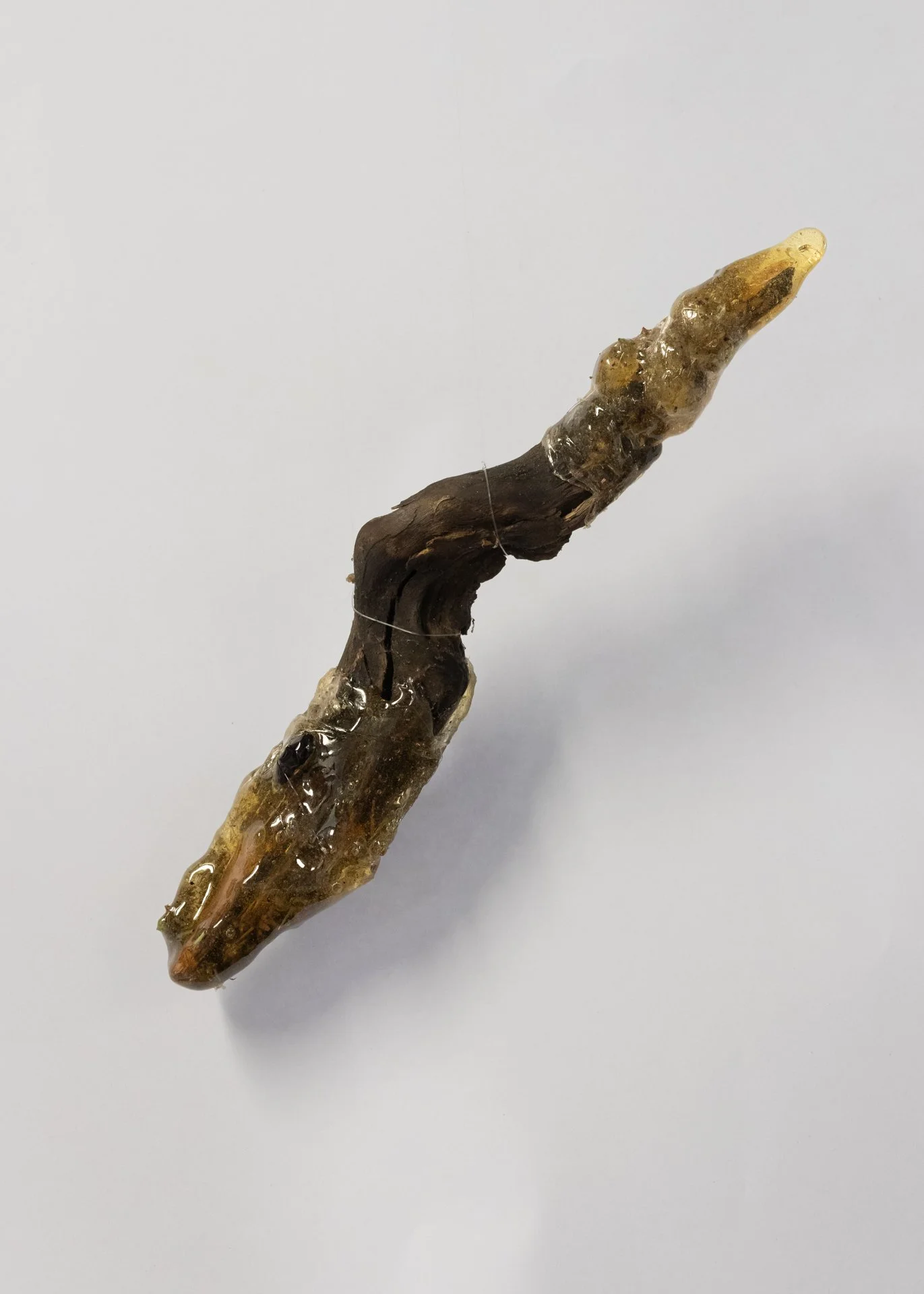
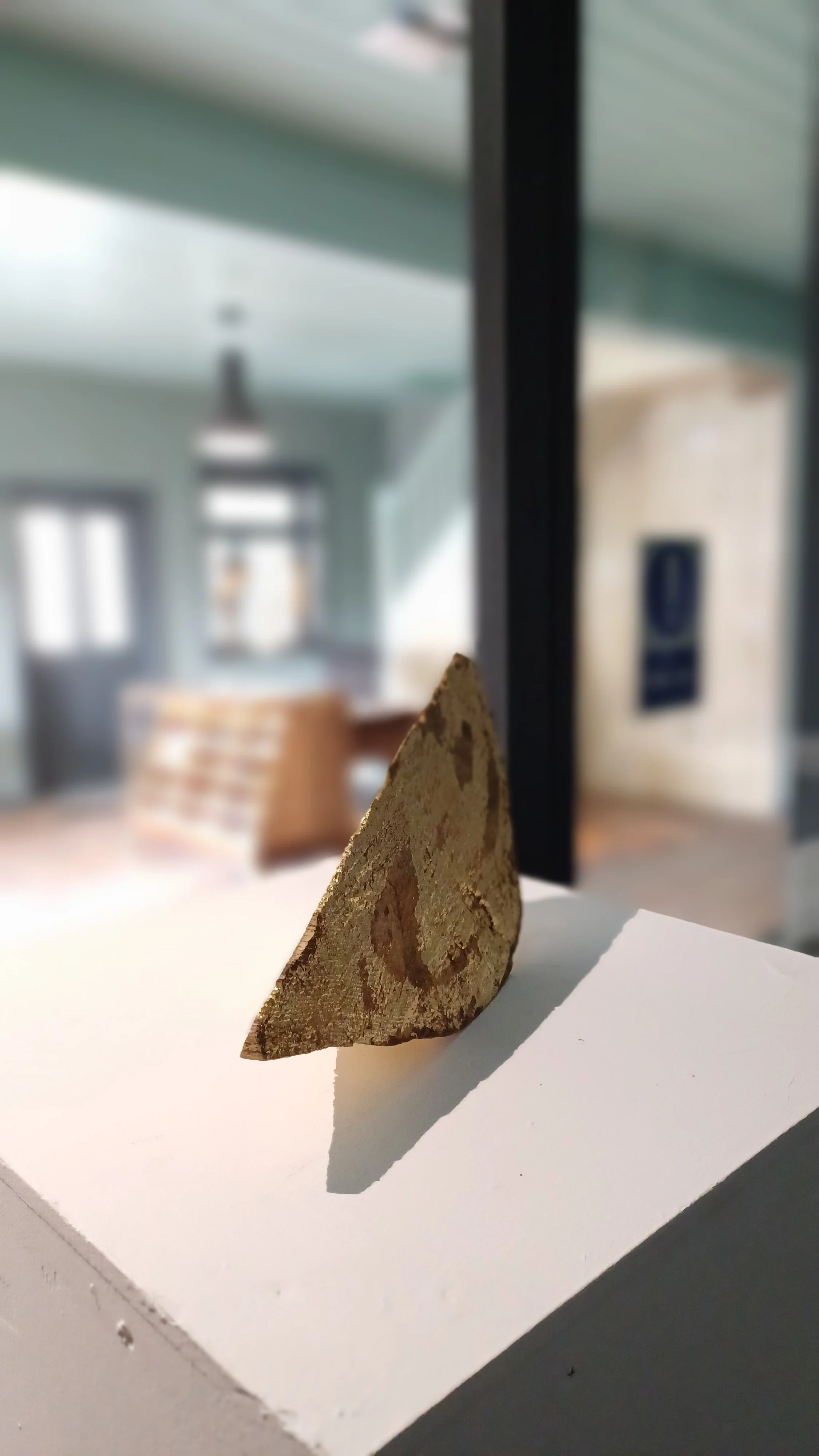
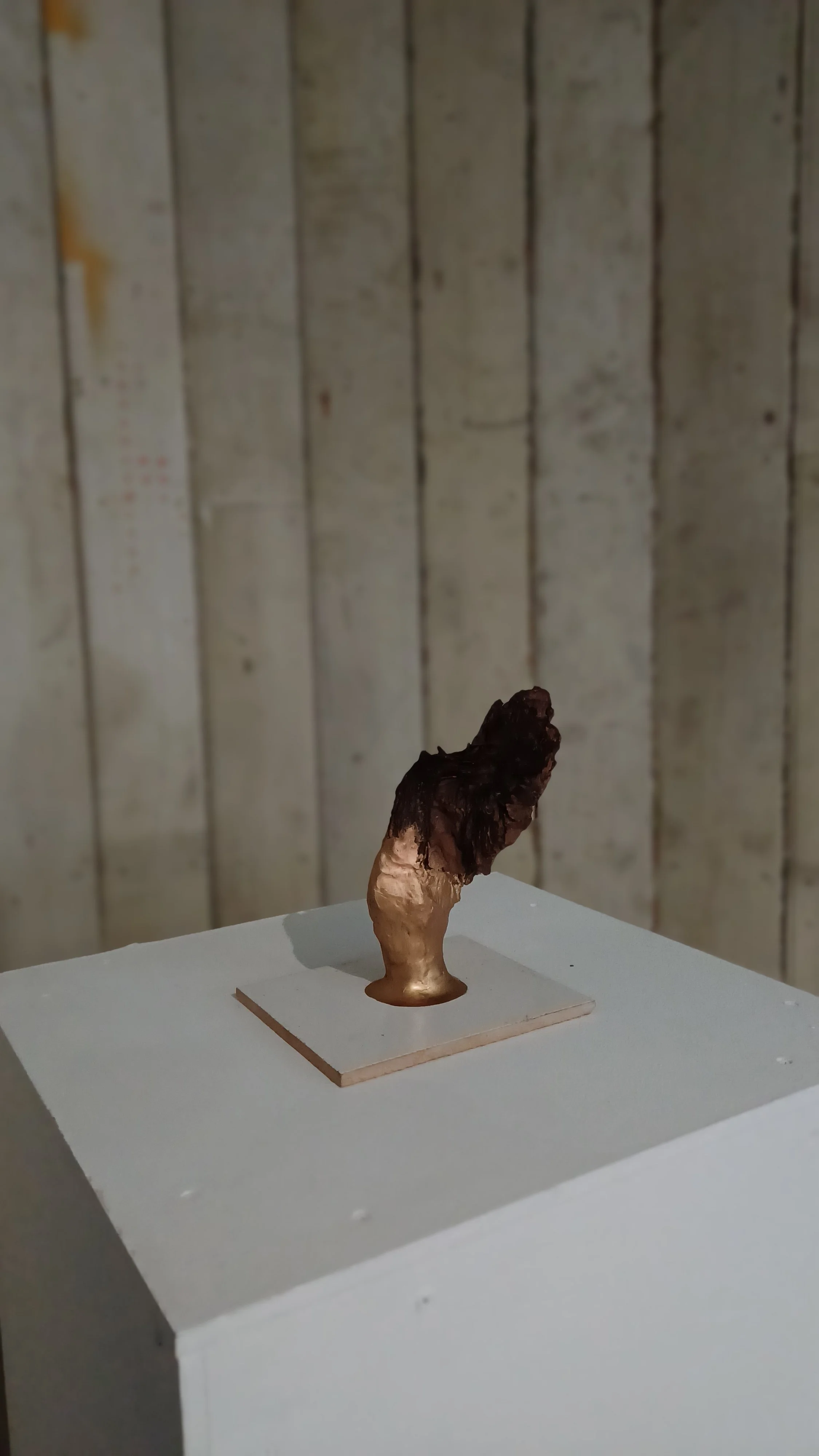
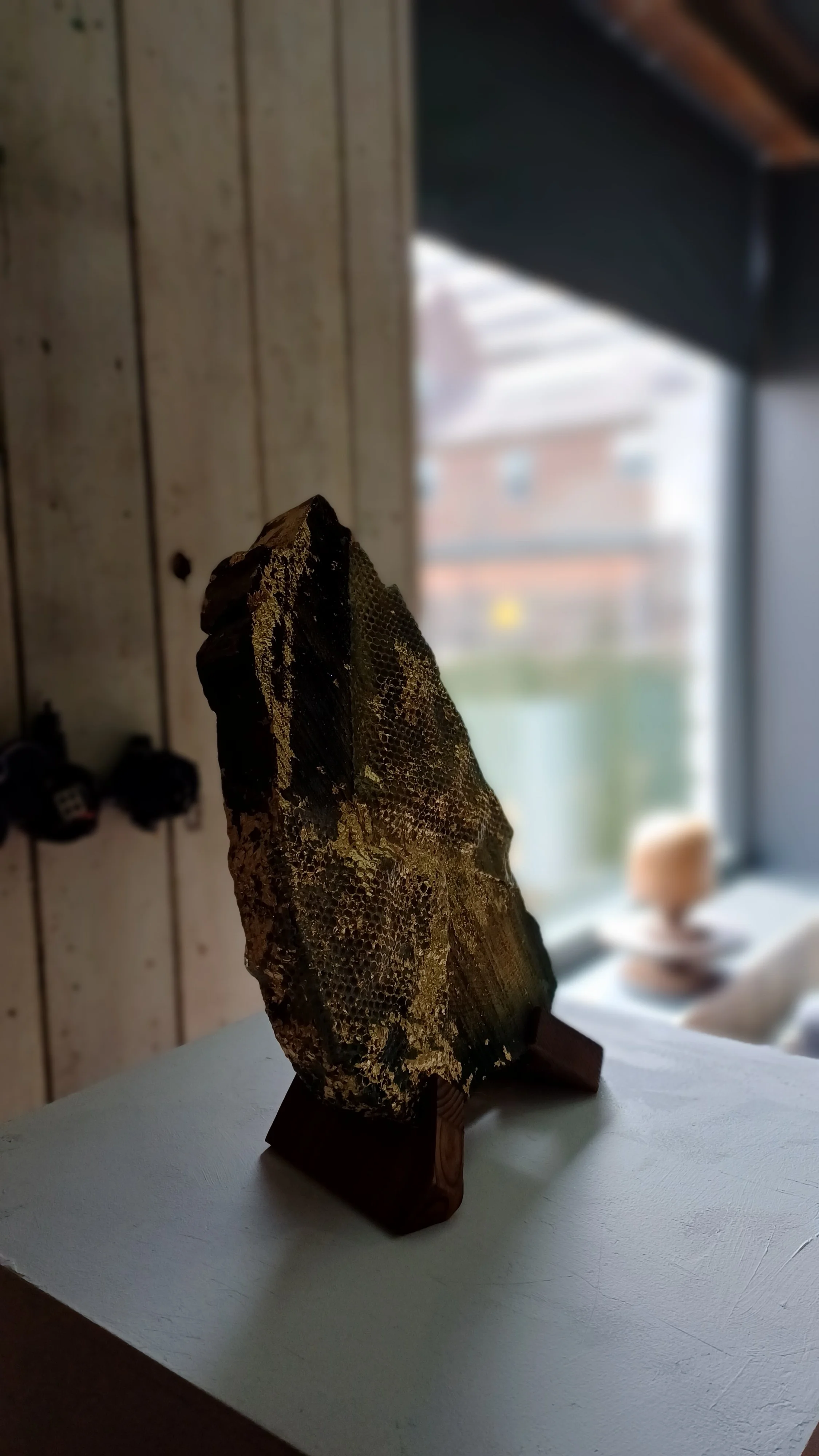
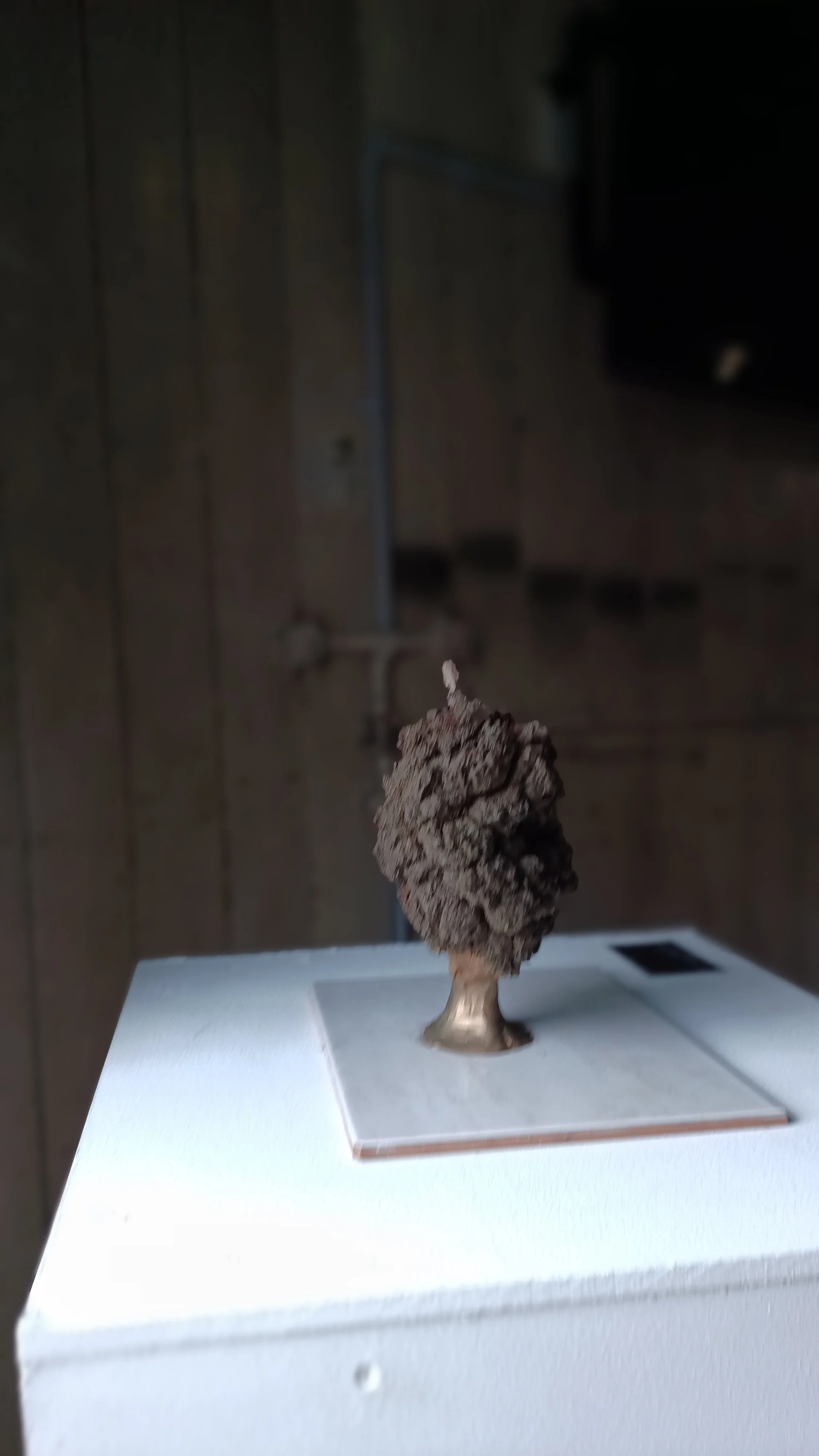
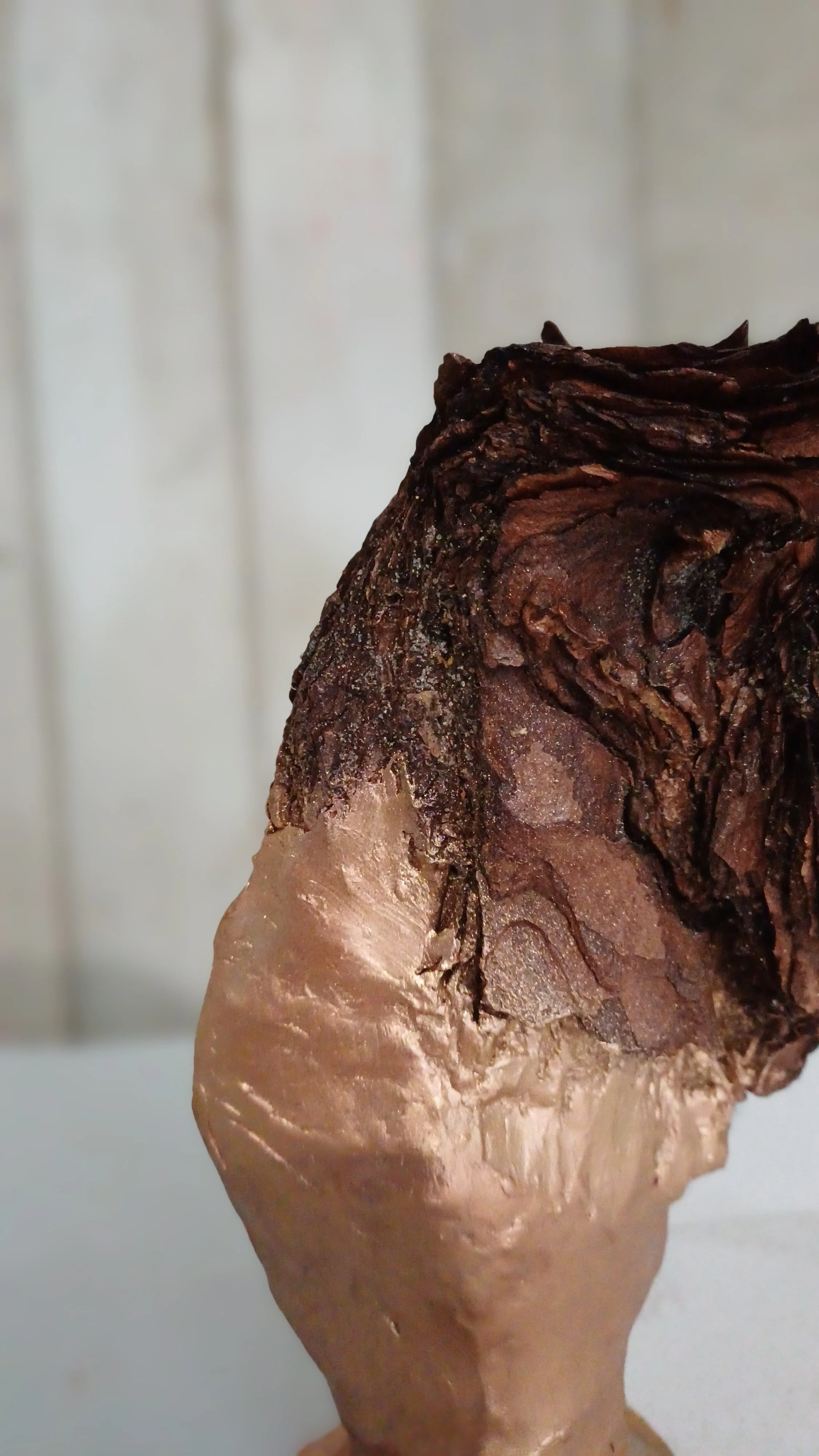
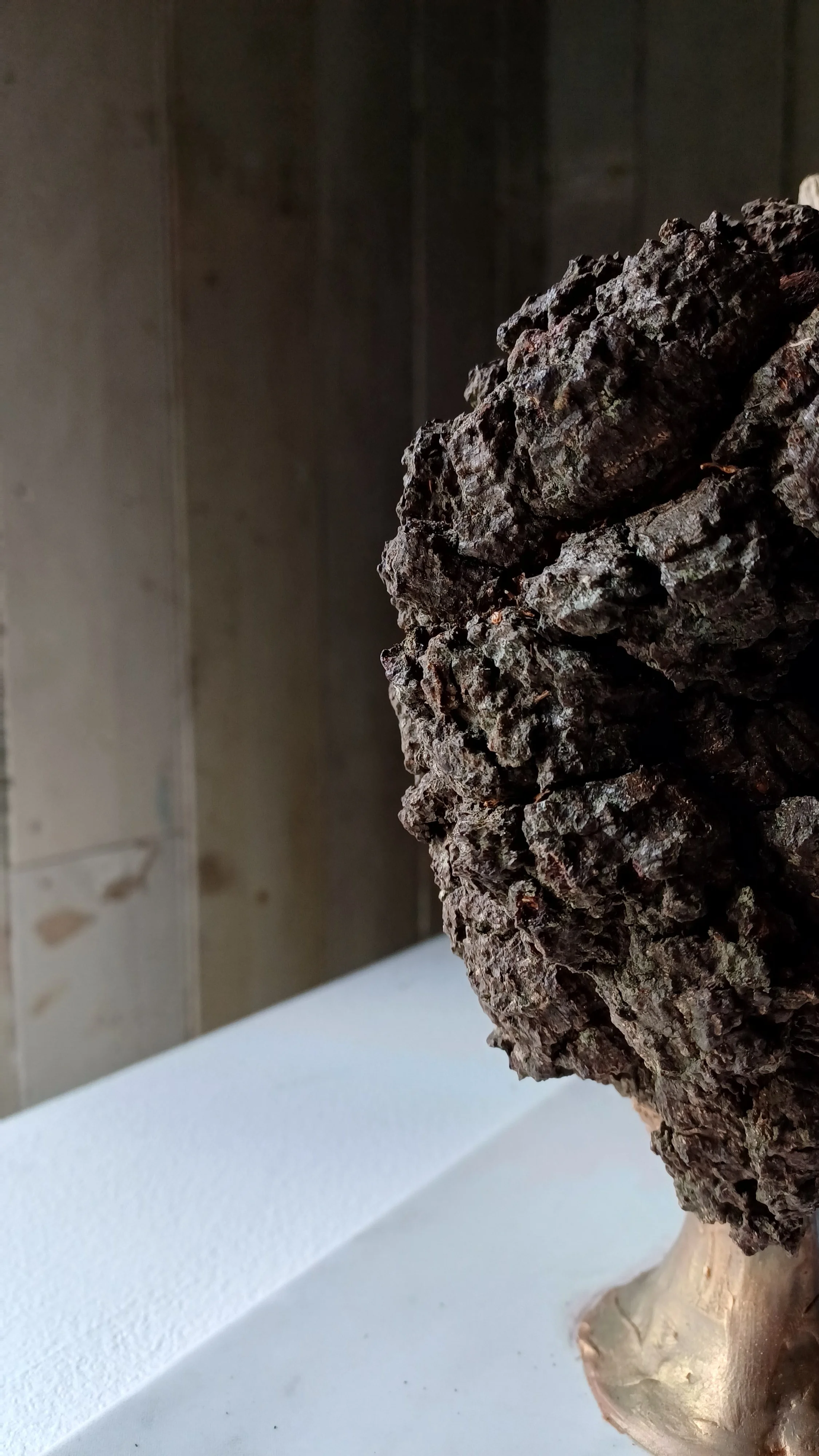
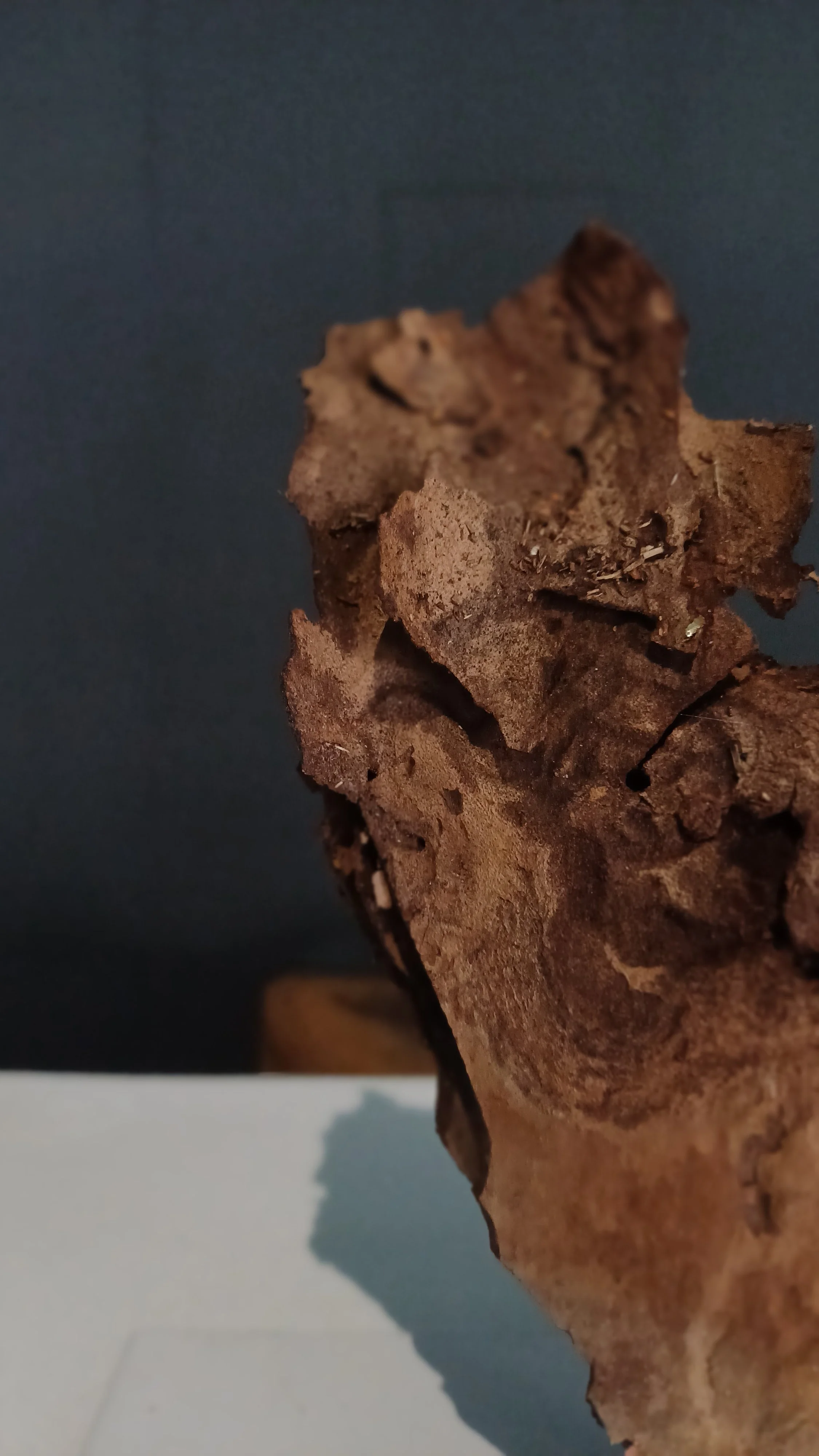
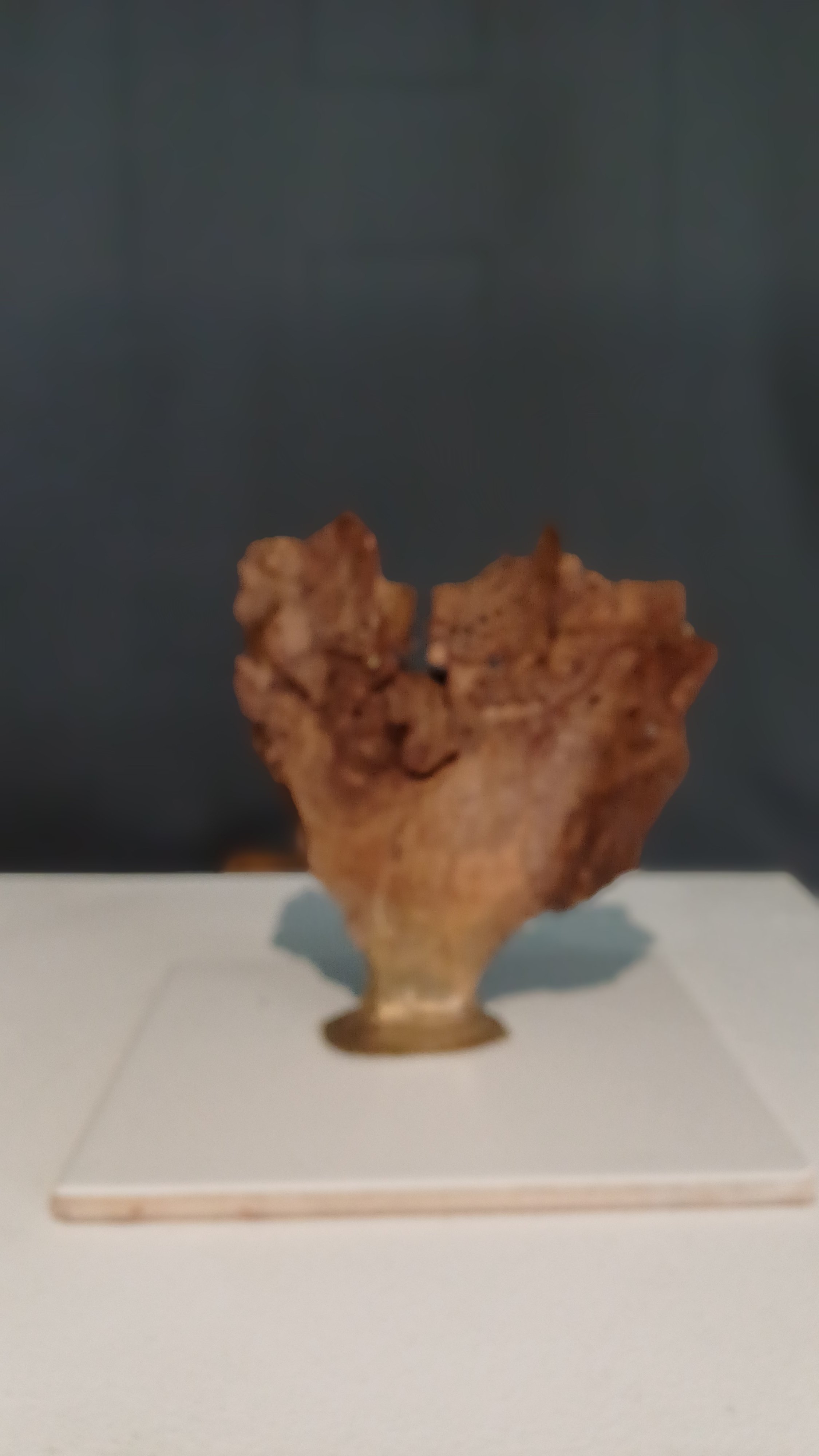
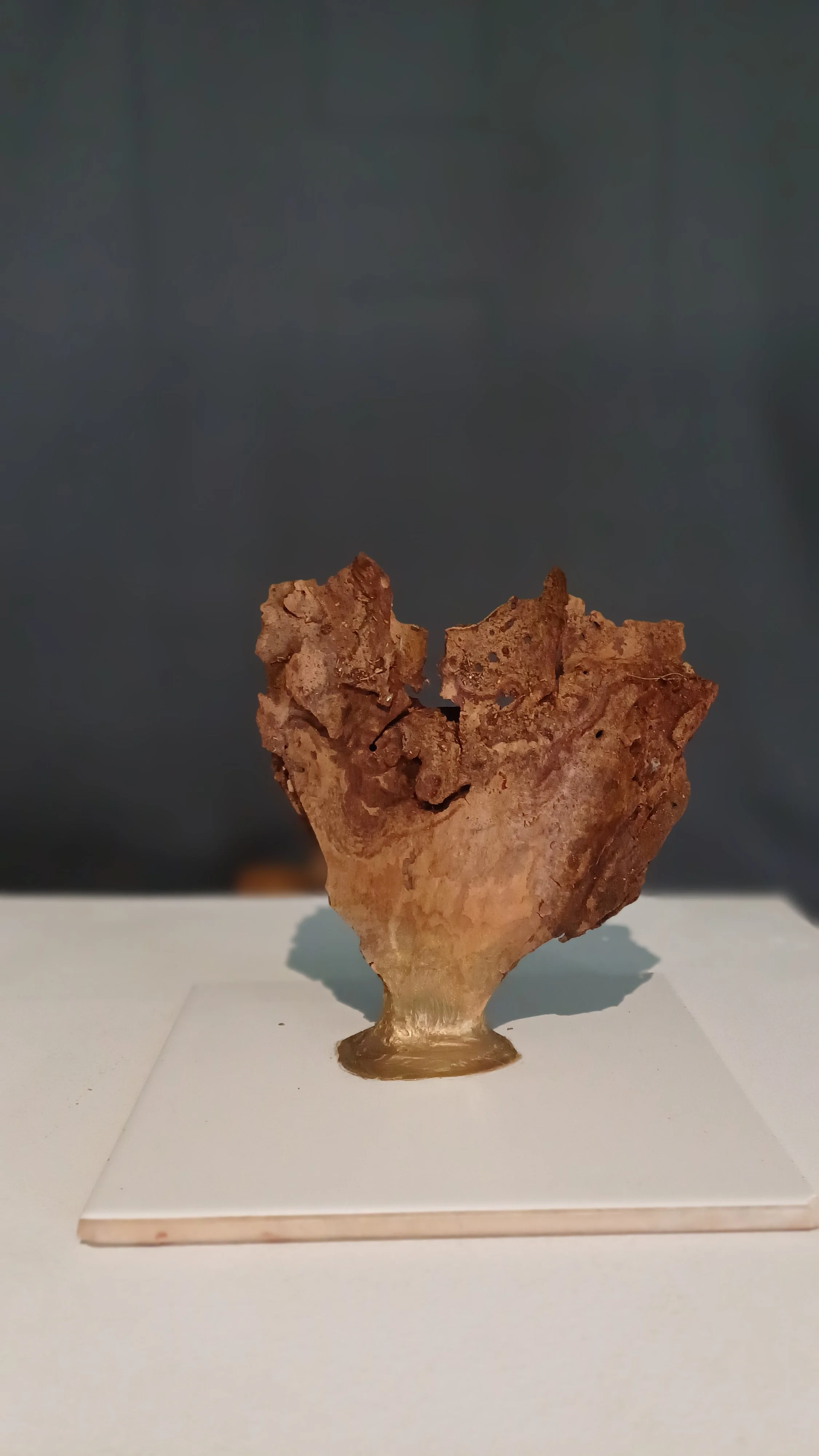
In June 2025, Hat Works became home to Golden Trace, a collection of sculptural works by University of Bedfordshire MA Art & Design student Agnieszka Małgorzata Kowalczyk.
Presented across two weeks, the exhibition gave Agnieszka an opportunity to take work developed through her MA beyond the university setting and experience it in a public venue. For Hat Works, it was also a chance to explore what the building can offer emerging artists: somewhere to exhibit, experiment and encounter audiences in different ways.
Nature, material and transformation
Agnieszka’s practice grows from a fascination with nature: its structures, rhythms, textures and less easily explained qualities.
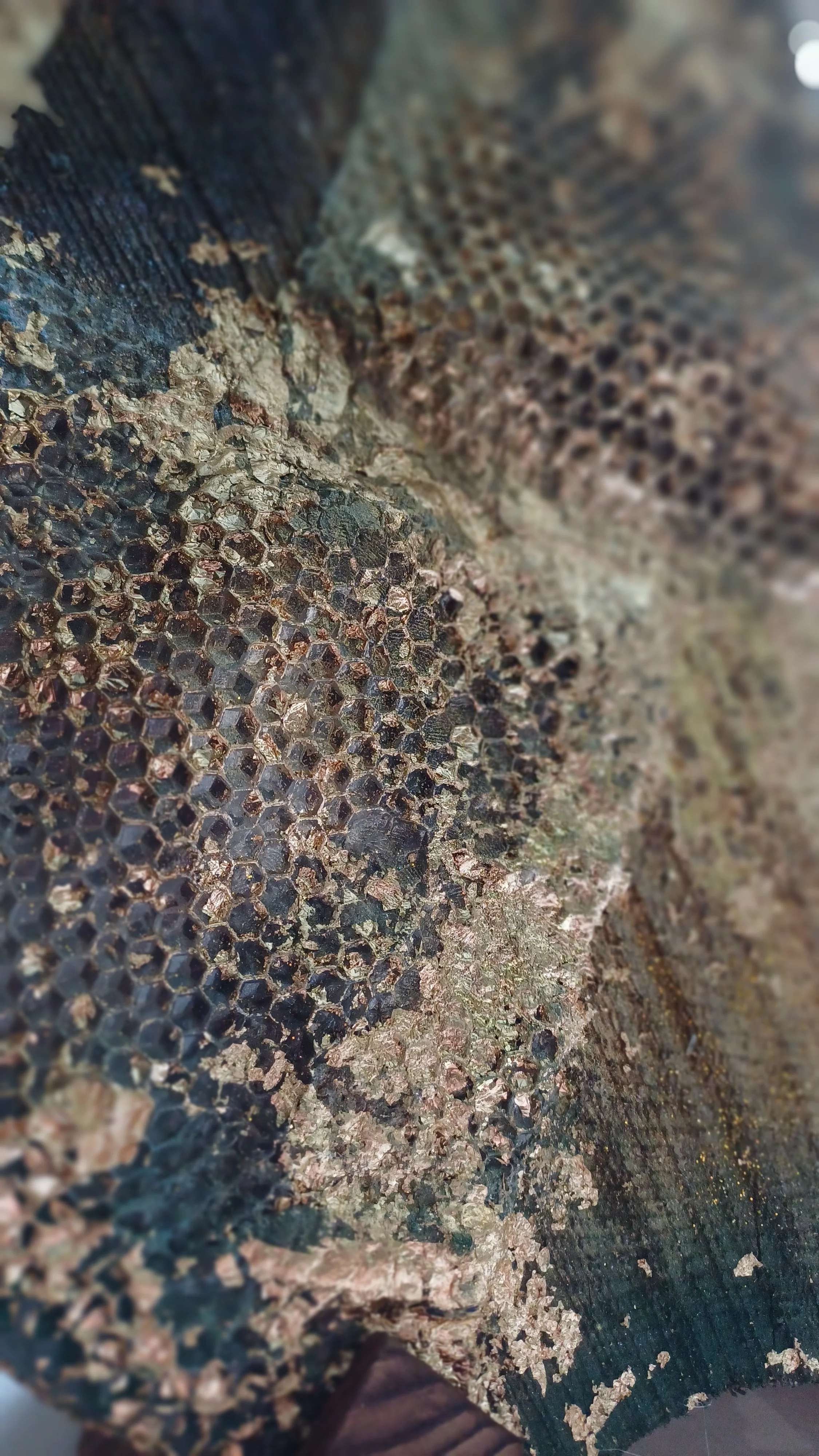
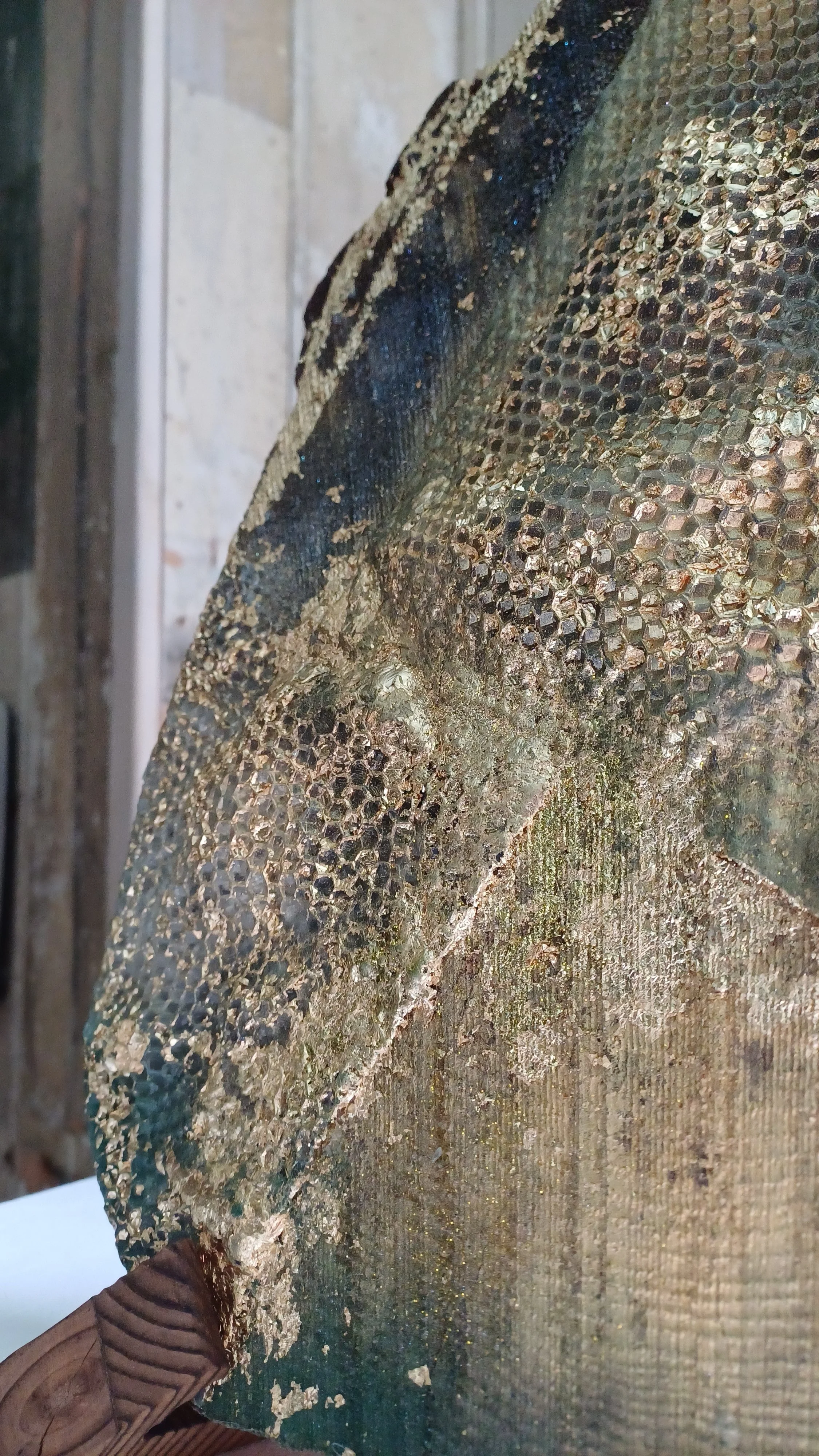
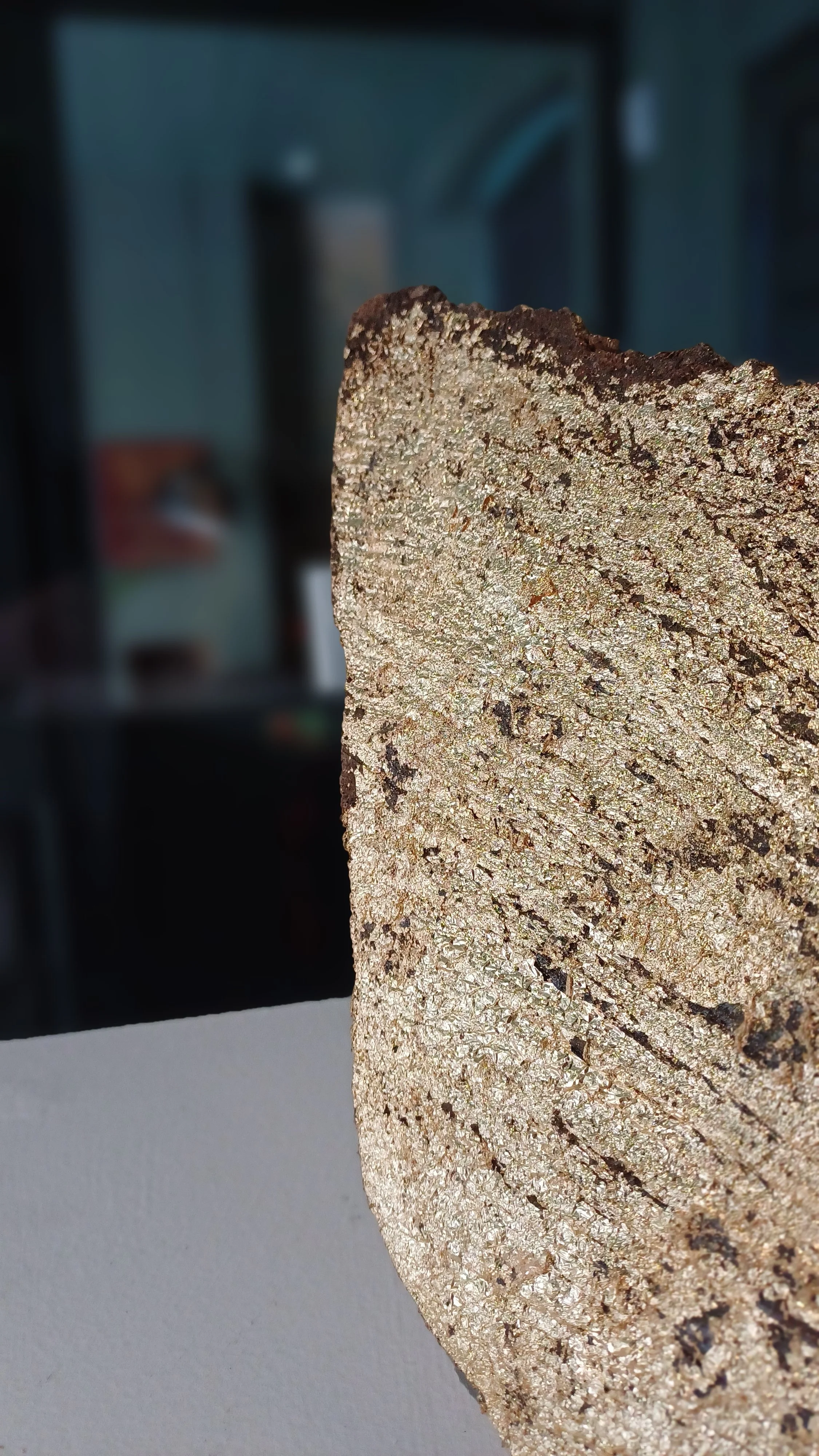
Her sculptures incorporate objects gathered during walks, including pieces of wood, bark and other natural forms, which she combines with materials such as beeswax, gelatine, pigment and gold leaf. The resulting works sit somewhere between found natural objects and deliberately constructed forms.
Throughout Golden Trace, these combinations invited visitors to look closely at surfaces, imperfections and transformations. Gold appears as a recurring material, representing something precious and worth protecting, while tactile materials such as wood, wax and gelatine bring a physical and sensory dimension to the work.
At its heart, the project asks us to reconsider our relationship with the natural world, not simply as something to observe, but something experienced through touch, material, memory and proximity.
From MA work to a public exhibition
Rather than presenting Golden Trace for a single event, the installation remained at Hat Works across two weeks.
That additional time mattered. It allowed Agnieszka to experience her work in a different context, observe how people interacted with it and gain experience of presenting an exhibition to audiences outside the university.
A Meet the Artist drop-in created an informal opportunity for visitors to speak directly with Agnieszka about the works, their materials and the ideas behind them.
The exhibition also became part of the everyday life of Hat Works. People arriving for meetings, working in the building or attending other activity encountered the sculptures along the way. On the day of the Meet the Artist session, members of the Architectural Heritage Fund were also gathering in the Hat District, bringing another audience into contact with the exhibition.
Experiencing sculpture through touch
One of the most memorable encounters with Golden Trace came through a specially arranged visit by members of an informal group of visually impaired people.
Working with Agnieszka and The Culture Trust's Creative Talent Programme Lead, we developed a guided tactile curatorial experience specifically for the group.
Usually, encountering sculpture in an exhibition comes with a familiar instruction: don't touch. For this visit, that relationship was deliberately changed.
With Agnieszka's agreement, participants were able to handle and explore selected pieces through touch. The physical encounter was accompanied by conversation about what they were feeling, the materials used, Agnieszka's motivations and the processes through which the works had been made.
It proved particularly appropriate for an exhibition so concerned with texture and materiality. Bark, wood, wax and other surfaces could be understood directly rather than solely through visual description.
The group thoroughly enjoyed the experience, but it also gave us something useful to think about: how relatively small changes in the way an exhibition is approached can create very different ways into an artist's work.
A simple collaboration with wider possibilities
Golden Trace grew from our developing relationship with the School of Arts and Creative Industries at the University of Bedfordshire.
One of the strengths of the project was its simplicity. The work already existed, having been developed through Agnieszka's MA, while the University kindly facilitated the loan of the plinths needed to present it. Existing interpretation about the artist and her practice could also be adapted for the new setting.
This allowed us to concentrate on creating the opportunity around the work rather than producing an exhibition from scratch.
It became a small but useful demonstration of what collaboration between a cultural venue and a university can achieve: existing student work can gain another life and another audience, while emerging artists gain practical experience of presenting their practice beyond an academic environment.
The exhibition formed part of a wider conversation with the School of Arts and Creative Industries about future showcases and participation opportunities across The Culture Trust's spaces.
What can Hat Works become?
Looking back a year later, Golden Trace also demonstrated something about Hat Works itself.
Primarily a creative workspace and meeting place, the building does not need to become a conventional gallery to make room for visual art. For two weeks, the sculptures changed how parts of the building were encountered and created conversations between an artist, people who work in the space, invited groups and visitors who happened upon the exhibition.
That is something we are interested in continuing to explore.