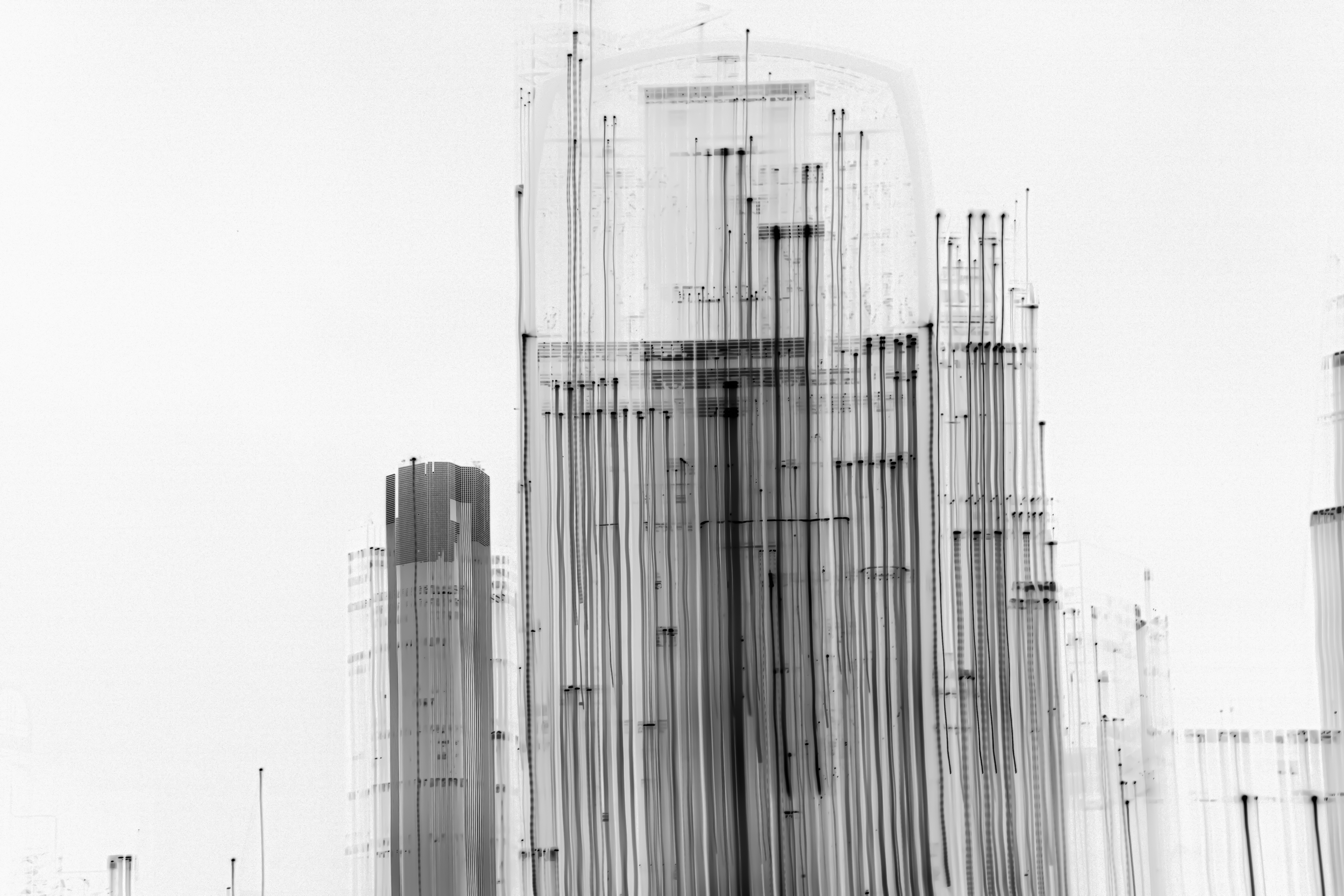
Project Update March 2026
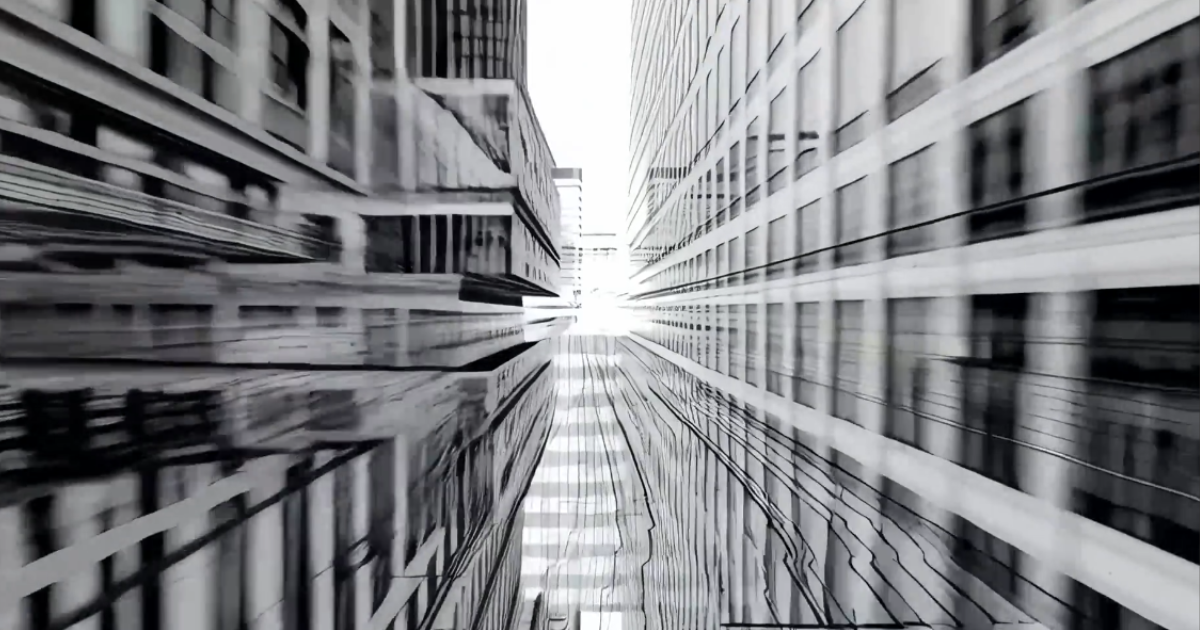
Still frame from 2025 project: Empty Spaces: Glide by Swapnil Patil and collaborators, showing an abstract, black and white representation of a viewer moving through deconstructed high-rise, urban environment.
Announcing: Empty Spaces: Luton!
We are happy to announce that Swapnil Patil will return to Luton in 2026 with Empty Spaces: Luton (working title) which will feature an new and original body of work celebrating Luton’s landmarks during it’s 150 years anniversary with workshops, talks and an exhibition! Watch this space and subscribe!

From Hidden in Plain Sight to the Screen: A Quiet Journey Through The Empty Spaces
What began as a single photographic contribution to Hidden in Plain Sight has unfolded into a meaningful chapter in my practice at the Hat District. The journey from a still image on a wall to a moving-image screening grew naturally — a gentle expansion of the same ideas into a new form.
Back in September, The Empty Spaces: Personal Absolute Space Point was part of Heritage Open Days 2025, where The Culture Trust Luton celebrated the architectural textures that define the Hat District. Hidden in Plain Sight invited visitors to pay attention to the unnoticed — tiled thresholds, carved brickwork, fading signage — and through that frame, my work explored the inner architectures we each carry. The relationship between what is hidden outside and what is hidden inside began to resonate more strongly than ever.
That exhibition quietly planted a seed.
Across the weeks that followed, conversations helped shape the possibility of bringing the film chapter of The Empty Spaces to the district. That idea matured alongside the exhibition’s lingering presence, and when the opportunity arose to show the film throughout December, it felt like a natural continuation — a way for people to sit with these “empty spaces” over time, not only in stillness.
The December installation became an ongoing invitation. People encountered the video unexpectedly, paused with it, returned to it. Those weeks served as a subtle form of promotion for the screening — quiet but effective, aligning perfectly with the ethos of the work.
Yesterday’s screening brought the entire journey into focus. It was intimate and reflective, with conversations that touched on memory, inner silence, and the personal coordinates we retreat to when the world becomes overwhelming. Some spoke of how the film transformed their perception of the Hat District’s architecture, echoing the same interplay between external structures and internal landscapes explored in the photographs.
This film — The Empty Spaces: Glide — extends the earlier project into a new temporal register.
Where Personal Absolute Space Point sought to hold silence still, Glide introduces movement, allowing emptiness to reveal its own currents. The work evolves from my ICSAS methodology (Inverse Chrono-Spatial Axis Shift), a process that uses long exposure, intentional camera movement, and later inversion to collapse time into “temporal fossils.” In Glide, these temporal fossils unfold in real time, creating a sensation of drifting remembrance — as if memory itself were gliding across the frame.
This shift from still image to video is not simply technical; it is conceptual.
The rigid geometry of architecture softens, surfaces dissolve, and light stretches into quiet trajectories. Silence becomes fluid. Emptiness becomes a passage in motion. The notion of the “personal absolute space point” — once a static inner anchor during the pandemic’s uncanny quiet — now drifts with time, inviting viewers to move with it rather than remain still.
The aesthetic vocabulary of Glide emerges from contrast: presence and absence, blur and sharpness, shadow and glow. What appears void is never empty, but filled with latent resonance, revealed through inversion and motion.
To extend the experience, audiences were also invited to invert their phone colours and view the work through their camera — a simple gesture that activates an interactive digital dimension mirroring the film’s shifting temporal perception.
The film was shaped by a group of generous collaborators:
Motion Graphics / VFX — Simon Soloveichik
Music — Manas Saha
Digital Upscaling — Govind Anand
Video Editing – Kajus Kerusauskas
December’s screening offered a rare moment to witness all these strands come together: the stillness of September’s photographs, the quiet drift of December’s installation, and the shared reflection of the live screening. What began as part of a community exhibition has grown into a body of work that continues to shift, unfold, and reveal itself.
From its origins in a community photography exhibition to a dedicated film installation and public screening, The Empty Spaces has grown through collaboration, dialogue, and the supportive environment of The Culture Trust Luton. The project now stands as a significant chapter in the Hat District’s creative history — a testament to how artistic work can evolve steadily when given time, space, and an engaged community.
I’m deeply grateful to The Culture Trust Luton, the Hat District team, Jakub, everyone who visited the exhibitions, and all who attended the screening. This journey has shown me how work evolves when it’s given space, time, and a community willing to look — and feel — a little deeper.
Swapnil Patil
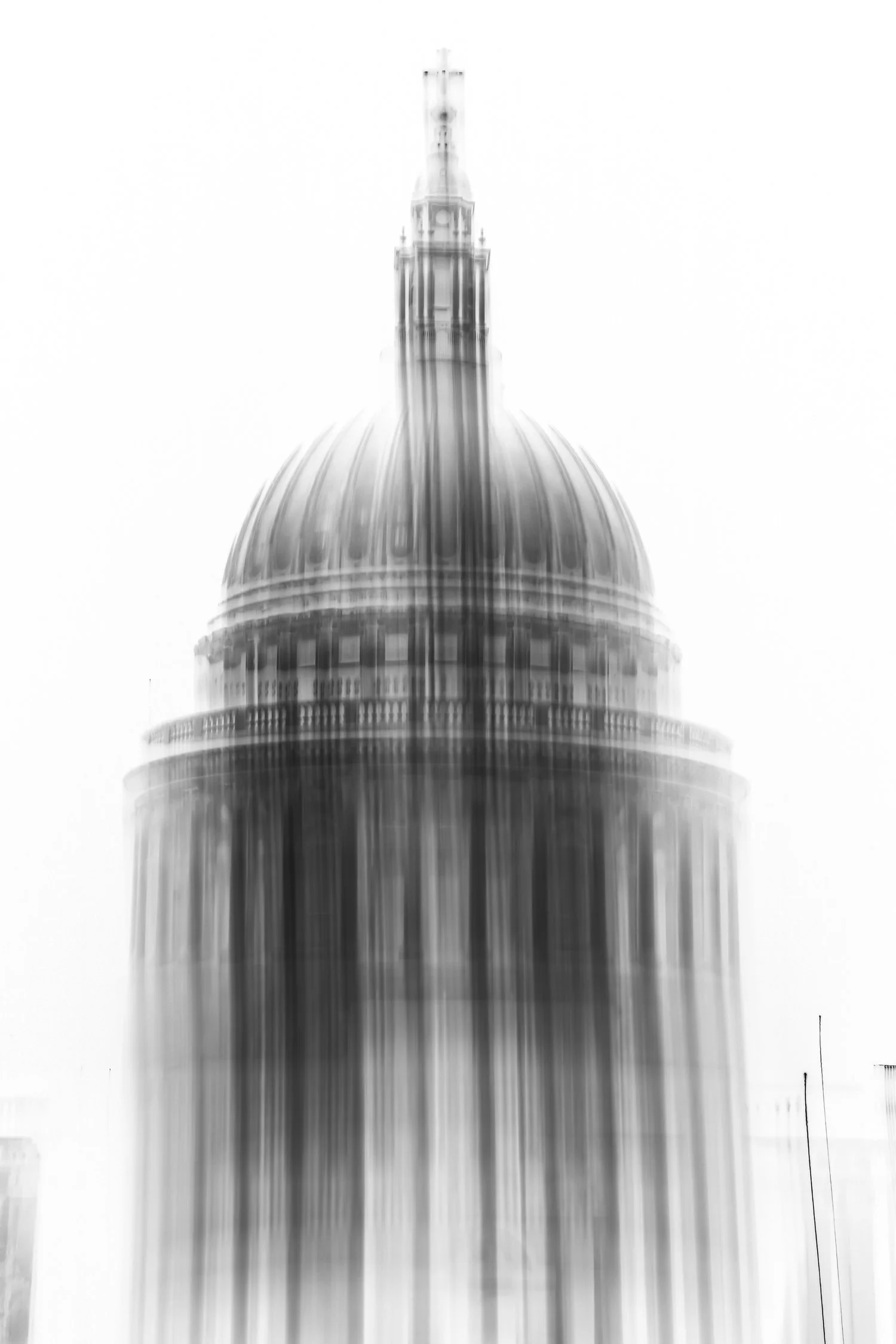
Swapnil Patil is a London-based artist whose practice spans photography, installation, moving image, and research-led performance. His work examines how people relate to water, memory, and the environments—physical, emotional, and political—that shape their lives. Moving between documentary sensibility and conceptual experimentation, he traces ecological change, urban transitions, and the subtle, often unspoken, emotional terrains that individuals navigate within them. His projects develop slowly, grounded in careful observation and informed by spaces marked by fragility, resilience, and unresolved histories.
A central strand of his practice is the exploration of absence: what is erased, overlooked, or difficult to articulate. This enquiry crystallises in his long-term project The Empty Spaces, a body of work that investigates the inner territories adults occupy when negotiating silence, vulnerability, and the need for emotional autonomy. Through minimal gestures, symbolic objects, photographic staging, and performative stillness, the project reveals how people carve out moments of mental clarity and personal grounding within the overwhelming noise of contemporary life.
Within this series, The Empty Spaces: Personal Absolute Space Point stands as a pivotal chapter. Here, Swapnil focuses on the small yet profound pockets of personal space that individuals claim as a form of inner refuge—moments where thought, emotion, and presence align. This work identifies the “personal absolute space point” each person holds within themselves, a private locus of grounding that becomes essential for navigating pressure, grief, transformation, or uncertainty. Presented through quiet compositions and sparse interventions, the series makes visible the psychological spaces that cannot be measured spatially but are deeply felt internally.
Swapnil’s approach is guided by his ICSAS method—Inner, Context, Space, Action, Silence—a framework he developed to interweave introspective processes with site-specific conditions and performative action. ICSAS enables him to consider not only what is present, but what is withheld; not only what a space contains, but how a person breathes, acts, and thinks within it. This method continually informs his environmental work, including projects centred on water scarcity, pollution, and transboundary conflicts, where personal experience and planetary urgency intersect.
Across his practice, Swapnil is drawn to the tension between visibility and invisibility, stillness and movement, control and vulnerability. Whether working with fragile materials, river water, urban light, or staged gestures, he creates spaces that invite viewers to slow down, sense what is missing, and reflect on their relationship with their surroundings—and ultimately, with themselves.